



The Optolong L-Ultimate 2" filter is a precision 3nm dual-narrowband light-pollution imaging filter designed for high-contrast emission-nebula astrophotography.
Its two ultra-narrow 3nm bandpasses isolate H-Alpha at 656.3nm and OIII at 500.7nm while rejecting mercury-vapor and sodium-vapor lighting, natural skyglow, and other unwanted wavelengths. Designed primarily for one-shot-color cameras—and compatible with DSLR, color or monochrome CMOS, and CCD cameras—the L-Ultimate delivers exceptional contrast and signal-to-noise performance under light-polluted skies.
The result is a dramatically darker sky background, reduced star prominence, and enhanced detail in faint emission nebulae. Compared with broader dual-band filters, the L-Ultimate’s narrow 3nm passbands provide stronger light-pollution suppression and better separation between nebulosity and the surrounding sky. Its multilayer coatings are also optimized to minimize halos and reflections around bright stars.
Optolong L-Ultimate Features
Dual 3nm Bandpasses
Isolates H-Alpha and OIII with an ultra-narrow 3nm bandwidth at each emission line.
Strong Light-Pollution Suppression
Rejects artificial lighting, broadband skyglow, and most wavelengths outside the two targeted emission bands.
Optimized for Color Cameras
Captures H-Alpha and OIII simultaneously with DSLR, mirrorless, and one-shot-color astronomy cameras.
Higher Nebula Contrast
Produces darker backgrounds and stronger separation between faint nebulosity and the surrounding sky.
Improved Star Control
The narrow transmission bands reduce broadband starlight and help emphasize faint nebular structure.
Advanced Optical Coatings
Ion-assisted multilayer coatings provide durable performance and are optimized to reduce reflections and halos.
Real-World L-Ultimate Performance
Explore emission-nebula images captured with the Optolong L-Ultimate and related Optolong dual-band filters. Select a thumbnail or use the arrows to browse the gallery.
 01 / 07
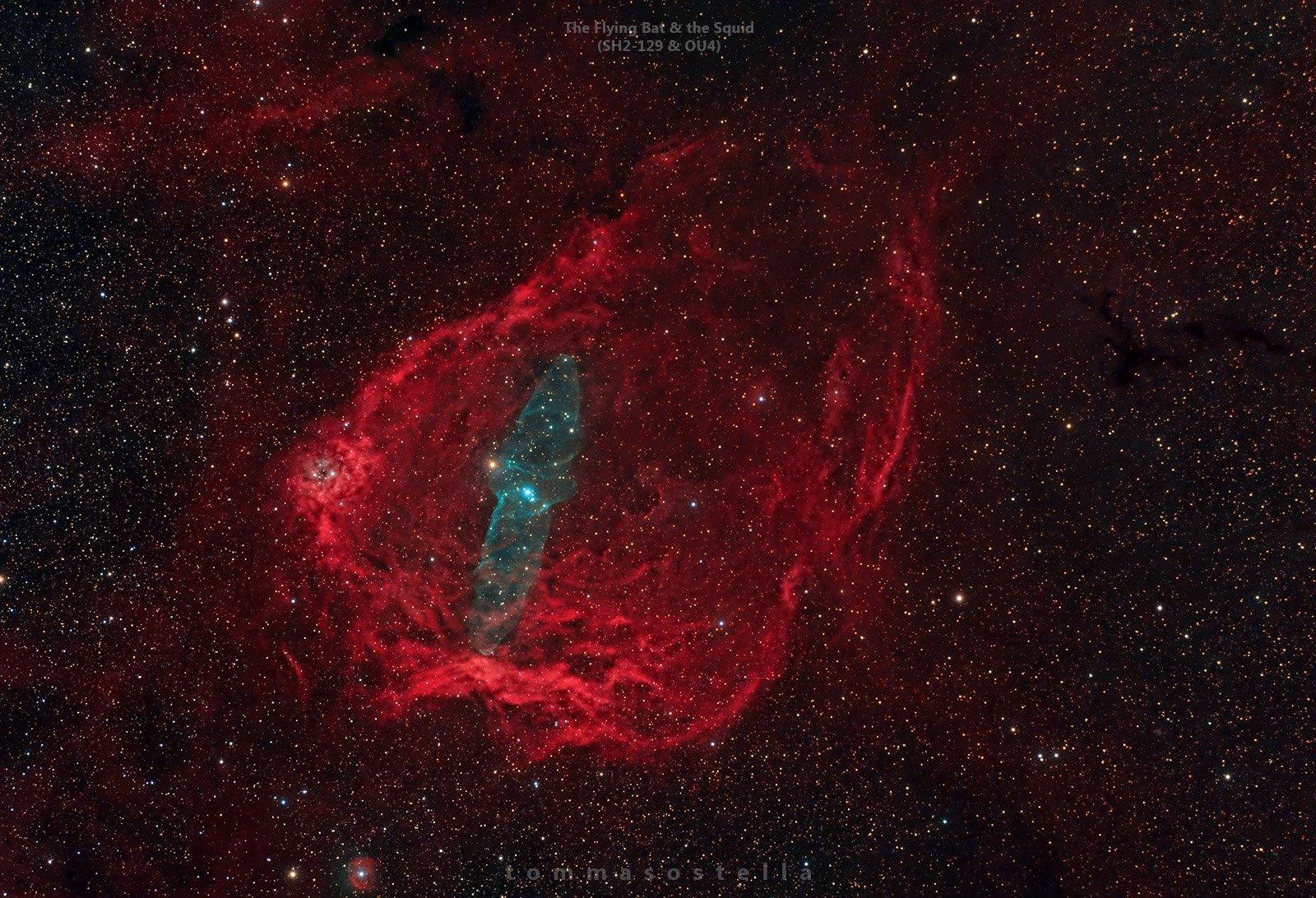
Flying Bat and Squid Nebulae
Ou4 is an exceptionally faint bipolar OIII structure located within the reddish H-Alpha emission of Sh2-129 in Cepheus. This two-year project combined 29 hours of integration using L-eXtreme data for Ou4 and L-Ultimate data for Sh2-129.
Image: Tommaso Massimo Stella · Italy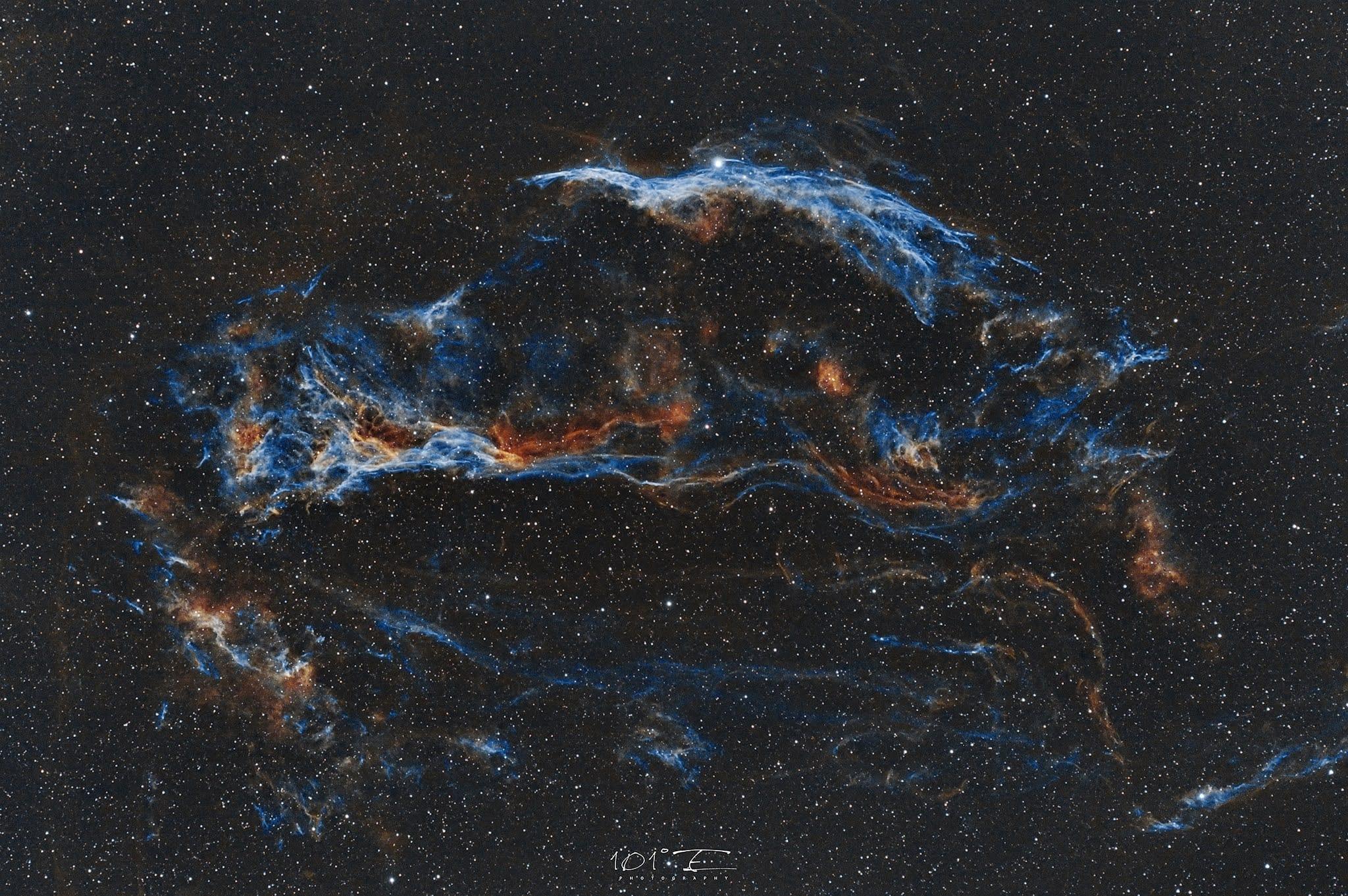 02 / 07
Veil Nebula
A 52-minute integration revealing the intricate emission filaments of this expansive supernova remnant.
Image: Tommy Lim KW · Malaysia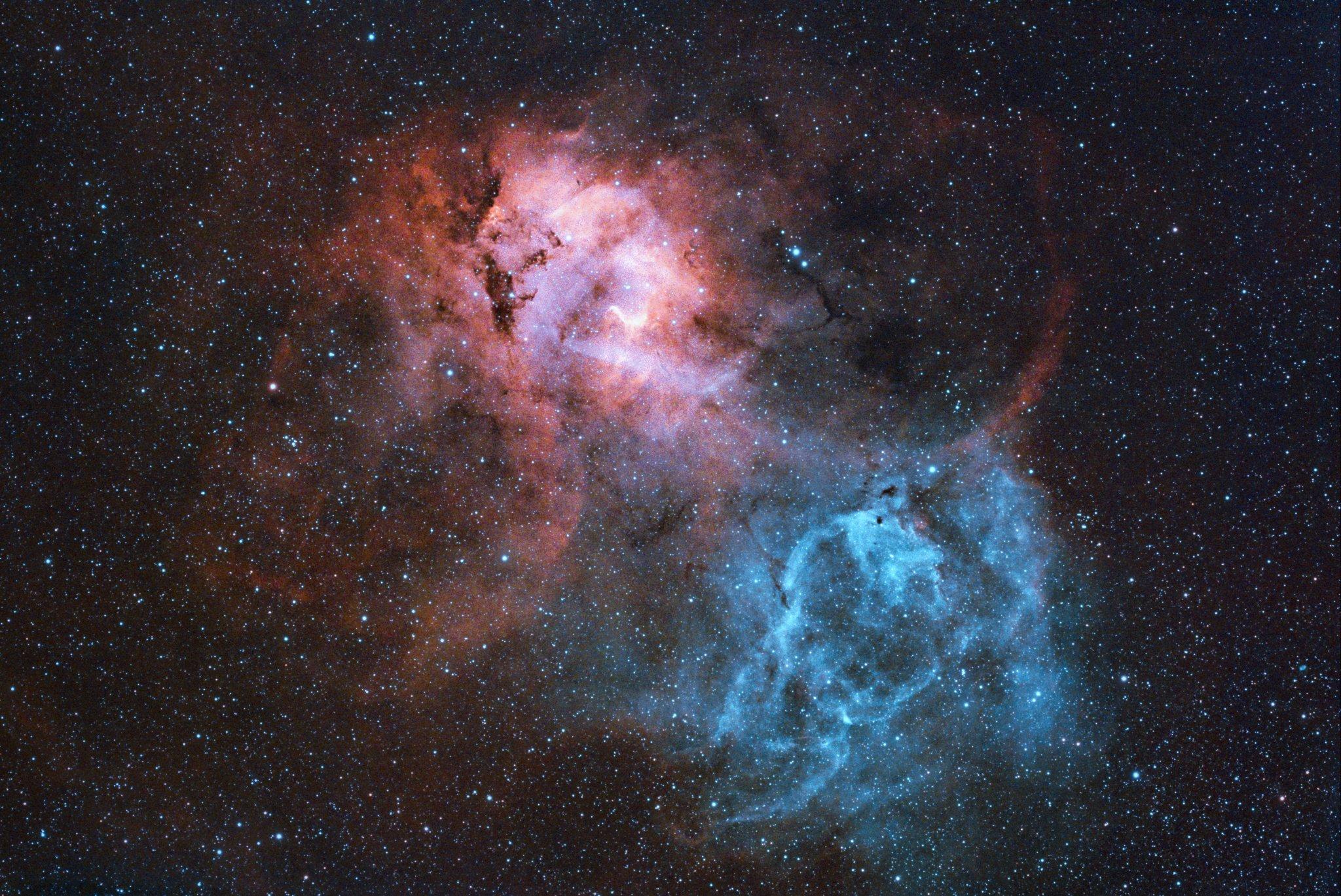 03 / 07
Sh2-132 · The Lion Nebula
An eight-hour L-Ultimate dataset captured without dark or flat calibration frames.
Image: Andrea Maggi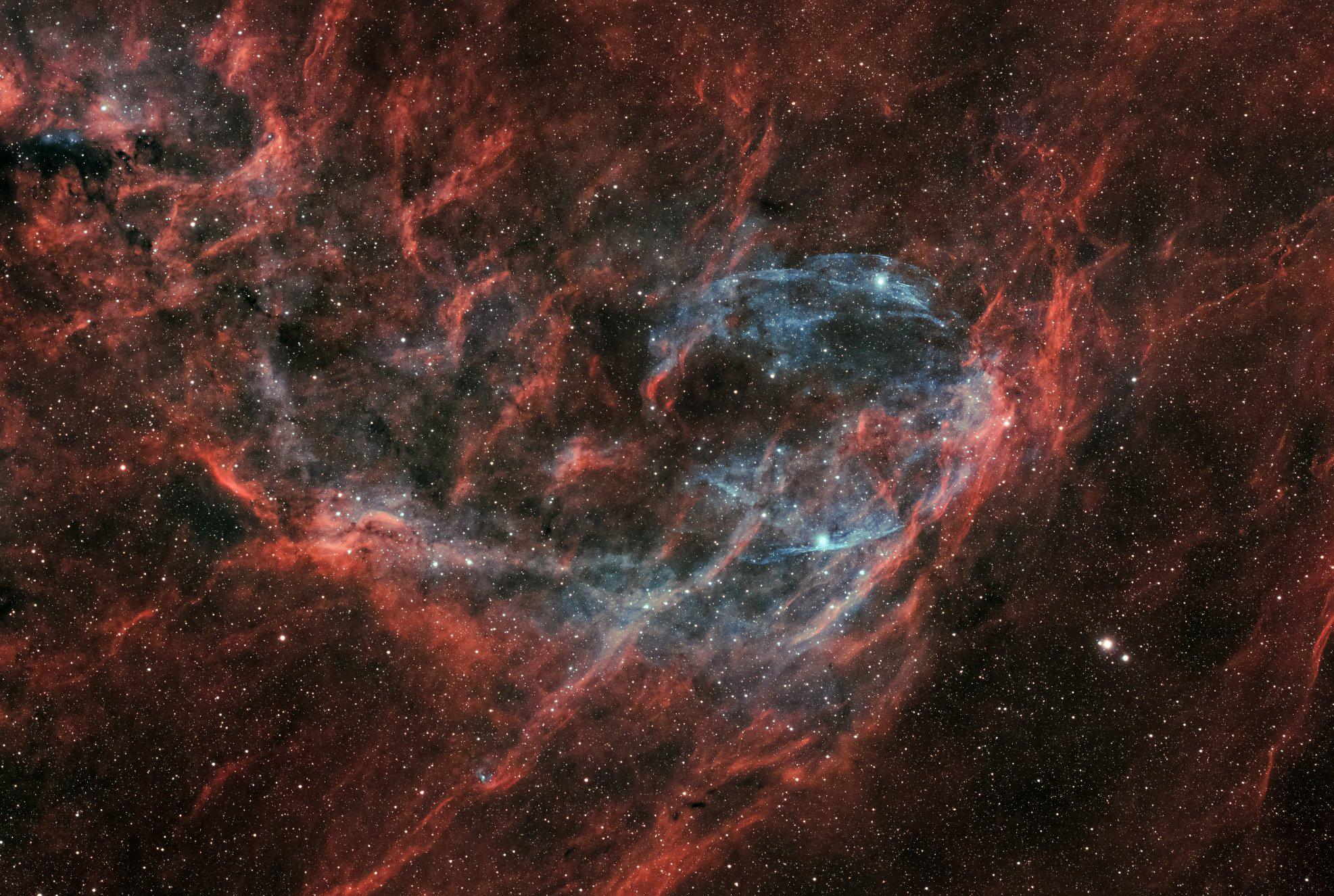 04 / 07
Supernova Remnant W63
A faint cosmic smoke ring along the Milky Way in Cygnus, surrounded by a rich complex of interstellar clouds and dust.
Image: José Jiménez · Spain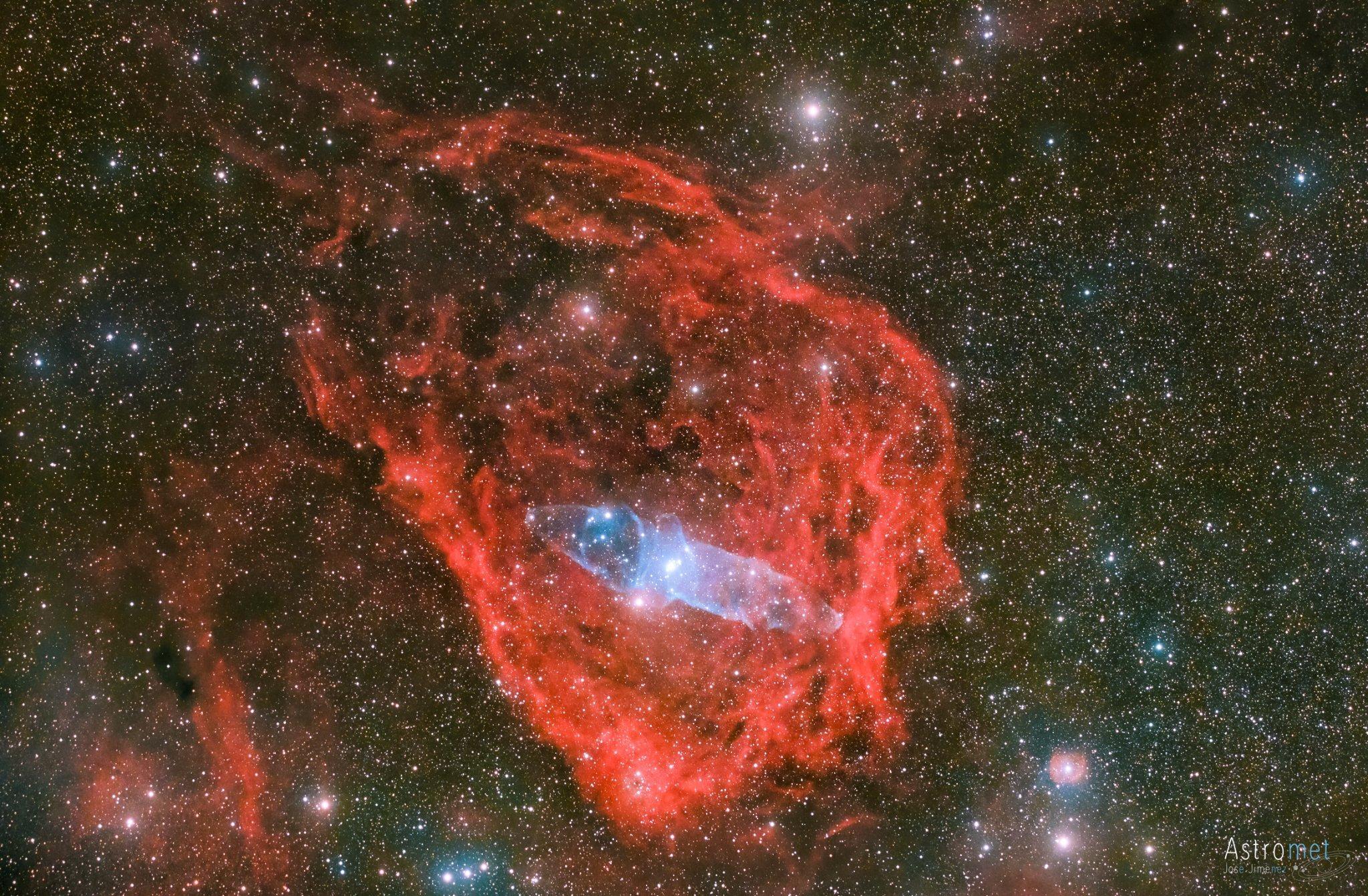 05 / 07
Sharpless 129
The Flying Bat Nebula rendered through a 7.5-hour L-Ultimate dataset.
Image: José Jiménez · Spain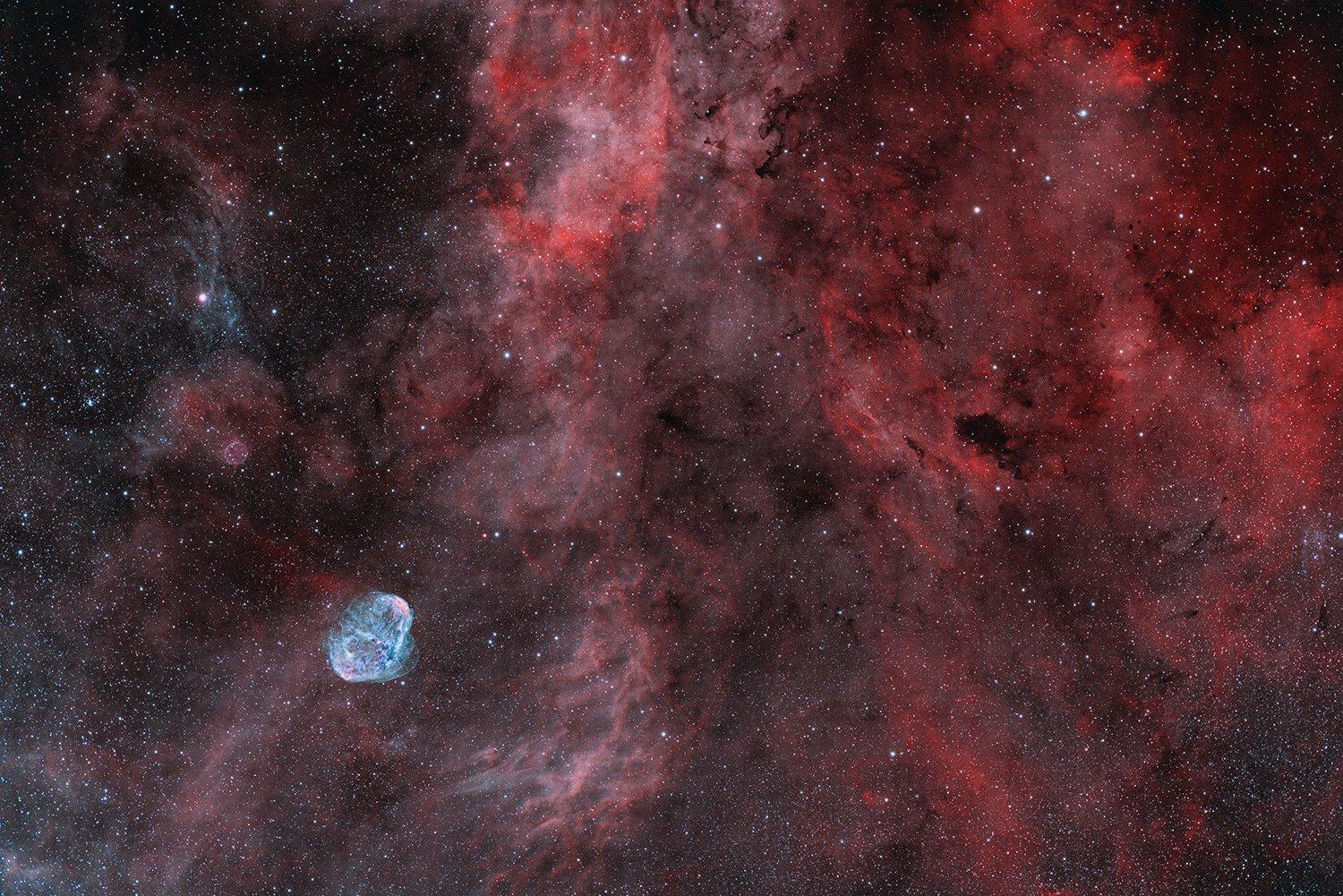 06 / 07
NGC 6888 · HOO Version
The Crescent Nebula presented in an HOO color palette from a narrowband imaging dataset.
Image: Andrea Maggi · Italy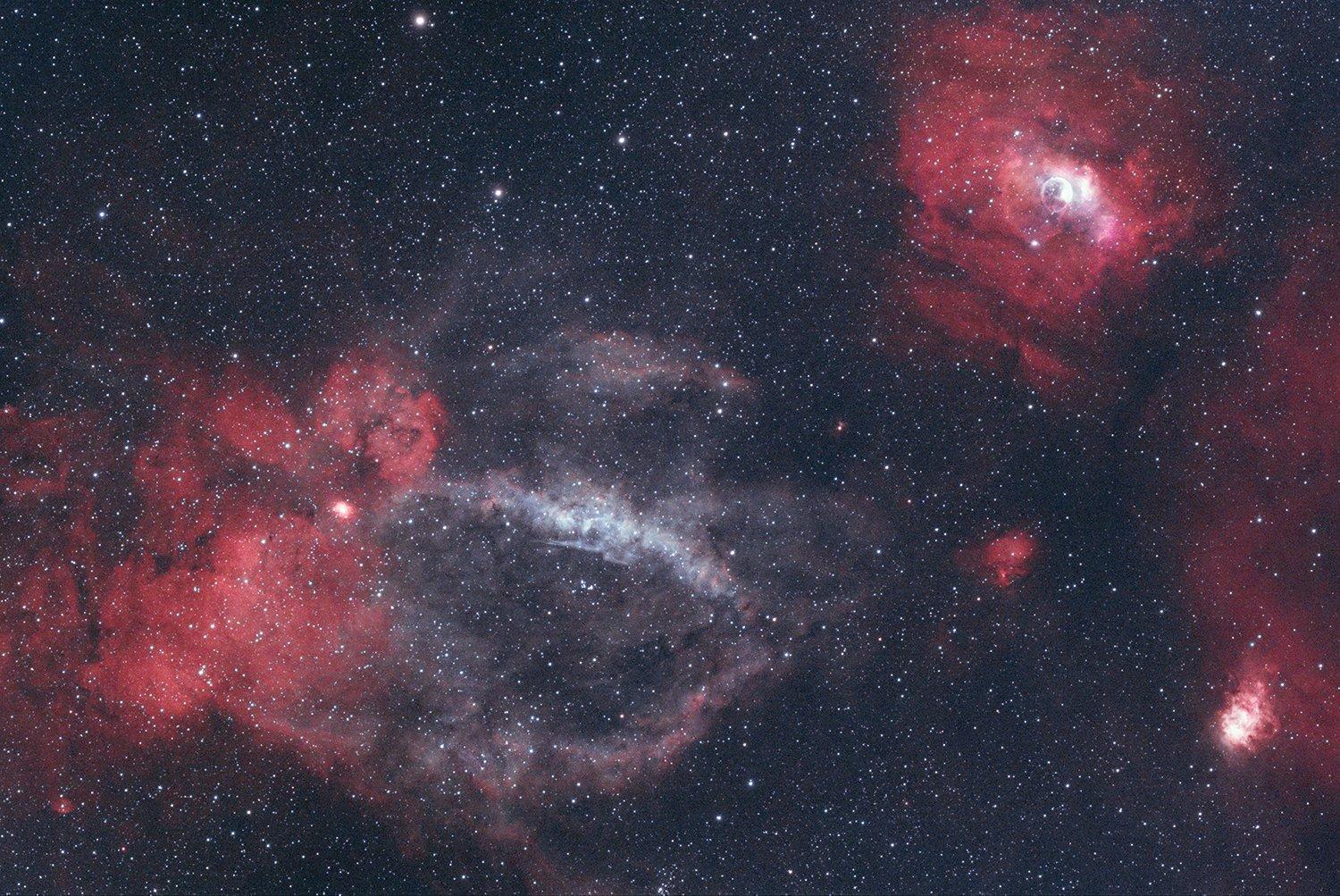 07 / 07
NGC 7635 and Sh2-157
Two hours of integration on the Bubble Nebula and neighboring Sh2-157 from Saint-Barthélemy.
Image: Andrea Maggi · ItalyWhat Can You Photograph with the L-Ultimate?
Excellent Targets
- Emission nebulae
- Planetary nebulae
- Supernova remnants
- Wolf-Rayet nebulae
- Large, faint HII regions
Not Intended for Broadband Targets
- Galaxies and natural-color imaging
- Reflection nebulae
- Open and globular star clusters
- Targets without meaningful H-Alpha or OIII emission
Focal-ratio compatibility: The standard L-Ultimate is best suited to optical systems around f/4 and slower. Very fast systems—including many HyperStar and RASA configurations—can shift the narrow 3nm passbands and reduce transmission. For those systems, select a filter specifically optimized for fast focal ratios.
Optolong L-Ultimate vs. L-eXtreme
| Feature | L-Ultimate | L-eXtreme |
|---|---|---|
| H-Alpha bandpass | 3nm | 7nm |
| OIII bandpass | 3nm | 7nm |
| Light-pollution rejection | More aggressive | High |
| Sky background | Darkest | Dark |
| Best suited for | Heavy light pollution and maximum nebula contrast | More forgiving general dual-band imaging |
Optolong L-Ultimate Specifications
| Filter type | Dual-narrowband light-pollution imaging filter |
| Mounted size | 2" / 50.8mm |
| Filter thread | Standard 2" M48 filter thread |
| H-Alpha transmission | 656.3nm with 3nm FWHM |
| OIII transmission | 500.7nm with 3nm FWHM |
| Blocking range | 300–1000nm |
| Out-of-band blocking | Greater than OD4 |
| Substrate | Optical glass |
| Optical thickness | 1.85mm |
| Surface quality | 60/40 |
| Transmitted wavefront | λ/4 RMS |
| Parallelism | 30 arc seconds |
| Coating | Multilayer anti-reflection coating with ion-assisted deposition |
| Camera compatibility | DSLR, mirrorless, color or monochrome CMOS, and CCD cameras; primarily intended for OSC imaging |
| Recommended focal ratio | Approximately f/4 and slower |
Frequently Asked Questions
What wavelengths does the Optolong L-Ultimate pass?
The filter passes two ultra-narrow 3nm bands centered on H-Alpha at 656.3nm and OIII at 500.7nm while blocking most other wavelengths.
Is the L-Ultimate designed for one-shot-color cameras?
Yes. It is particularly effective with one-shot-color cameras because H-Alpha and OIII data can be recorded simultaneously in a single exposure.
Can the L-Ultimate be used for galaxies?
It may reveal isolated H-Alpha regions within some galaxies, but it blocks most broadband light and is not intended for natural-color galaxy imaging.
Can I use the L-Ultimate with HyperStar or RASA?
The standard L-Ultimate is not recommended for very fast optical systems. At fast focal ratios, bandpass shift can move the narrow transmission bands away from H-Alpha and OIII, reducing signal. A fast-optics-optimized filter is the better choice for most HyperStar and RASA systems.
Is the L-Ultimate suitable for visual observing?
The L-Ultimate is designed primarily as an astrophotography filter. Its ultra-narrow 3nm passbands transmit very little light for conventional visual observing.
What’s Included
- Optolong L-Ultimate 2" mounted filter
- Protective plastic storage case